

Why OSI Exists
Your IT infrastructure should make you more capable, not more dependent.
Too often, organizations are left with undocumented systems. Vendors move on or internal staff leave and suddenly, no one fully understands how critical infrastructure actually works. What was working - sort of - becomes fragile, then urgent, then expensive.
The problem is rarely the technology itself. It’s that the knowledge never lived anywhere permanent. No documentation. No knowledge transfer. No clarity about what was built, why, or how it connects to everything else.
James Whitener founded OSI to change that. He brings enterprise-level expertise, but with a different philosophy: complete transparency, thorough documentation, and genuine knowledge transfer. Your team should be able to manage routine operations without calling someone every time something needs attention. And when you do need outside support, you should know exactly what you’re getting and why.


The OSI Story
Early in his career, James was brought in to assess a mid-sized manufacturing company's network after their IT consultant had departed. There was no documentation. No passwords recorded. No explanation of why anything was configured the way it was.
When the company's shipping system went down, they had to track down the former consultant - who charged emergency rates to fix something that should have been routine maintenance.
James saw this pattern repeat across different organizations. Companies managing city services, running logistics operations, building critical infrastructure, supporting growing teams, all dependent on external support for basic understanding of their own systems.
Meanwhile, in the larger organizations James worked with, expectations were different. Not because their systems were more sophisticated, but because documentation was non-negotiable. Every configuration decision was recorded. Every password was secured. Every system had clear documentation that any qualified engineer could follow.
The gap wasn't technical capability, it was whether anyone thought these organizations deserved that level of rigor and transparency.
James started OSI because he believed they did.

MEET JAMES WHITENER
MEET JAMES WHITENER
Founder & Principal Architect
James brings 25+ years of enterprise network architecture experience to every engagement, applying the same rigor and clarity to organizations of every size. He works directly with every client - there’s no team to hand you off to, and no junior staff learning on your budget.
Background:
Complex network architecture and implementation
Federal IT auditing and compliance frameworks
Mission-critical system design for organizations where downtime isn't an option
Teaching complex technical concepts to non-technical stakeholders
The OSI Method
Seven Layers. Zero Shortcuts.
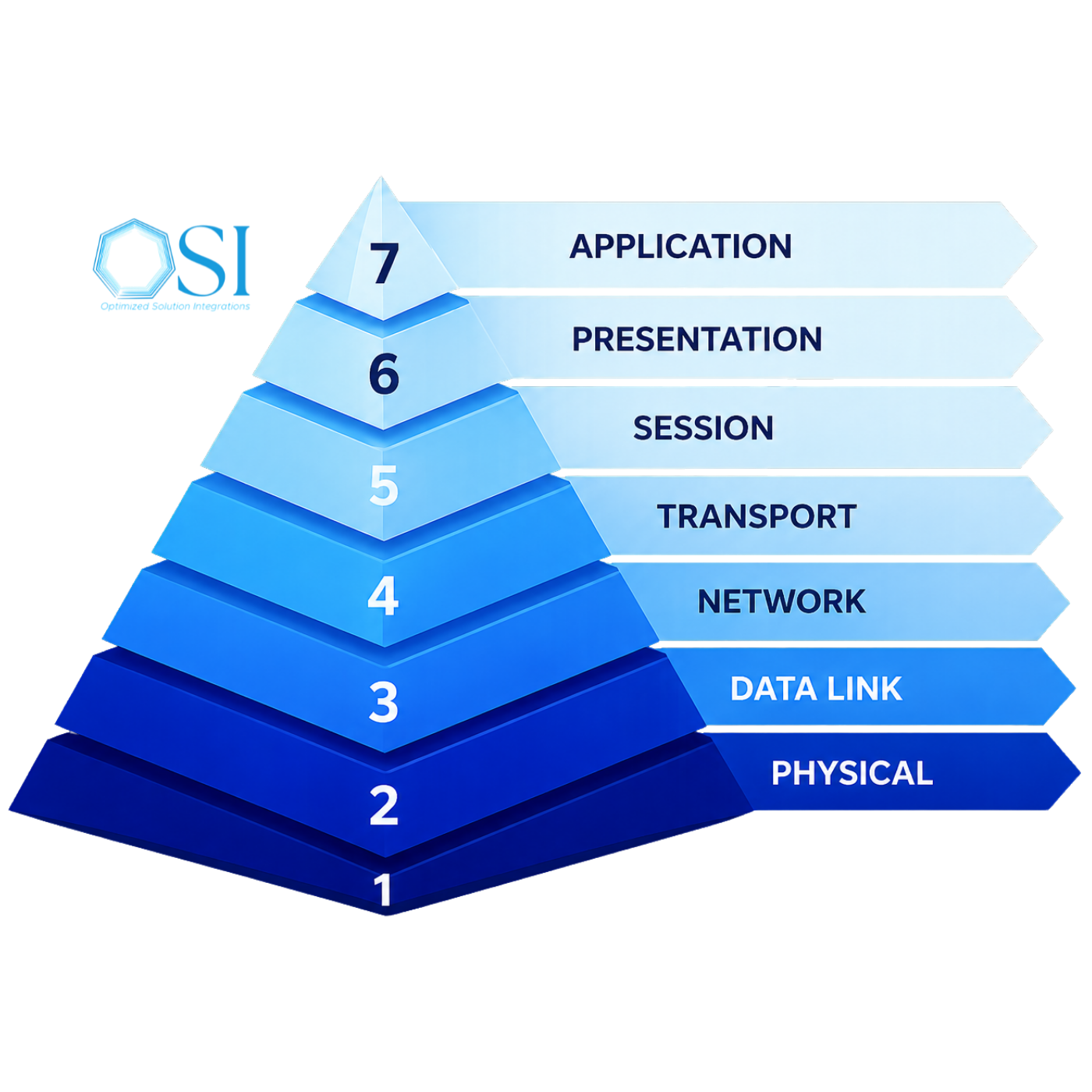
Our name reflects both what we do (Optimized Solution Integrations) and how we do it (the Open Systems Interconnection model).
The Open Systems Interconnection model is a seven-layer networking framework that every network engineer learns early in their career. It teaches an essential principle: infrastructure is built in layers, and each layer depends on the one below it. If your foundation has problems, everything built on top will be affected.
Most IT assessments examine surface-level symptoms - what's immediately visible and causing obvious problems. We analyze all the interdependent layers of your infrastructure and systems systematically, because lasting solutions require understanding the complete system.
Our seven-layered heptagon logo is a reminder that thorough work doesn't take shortcuts.
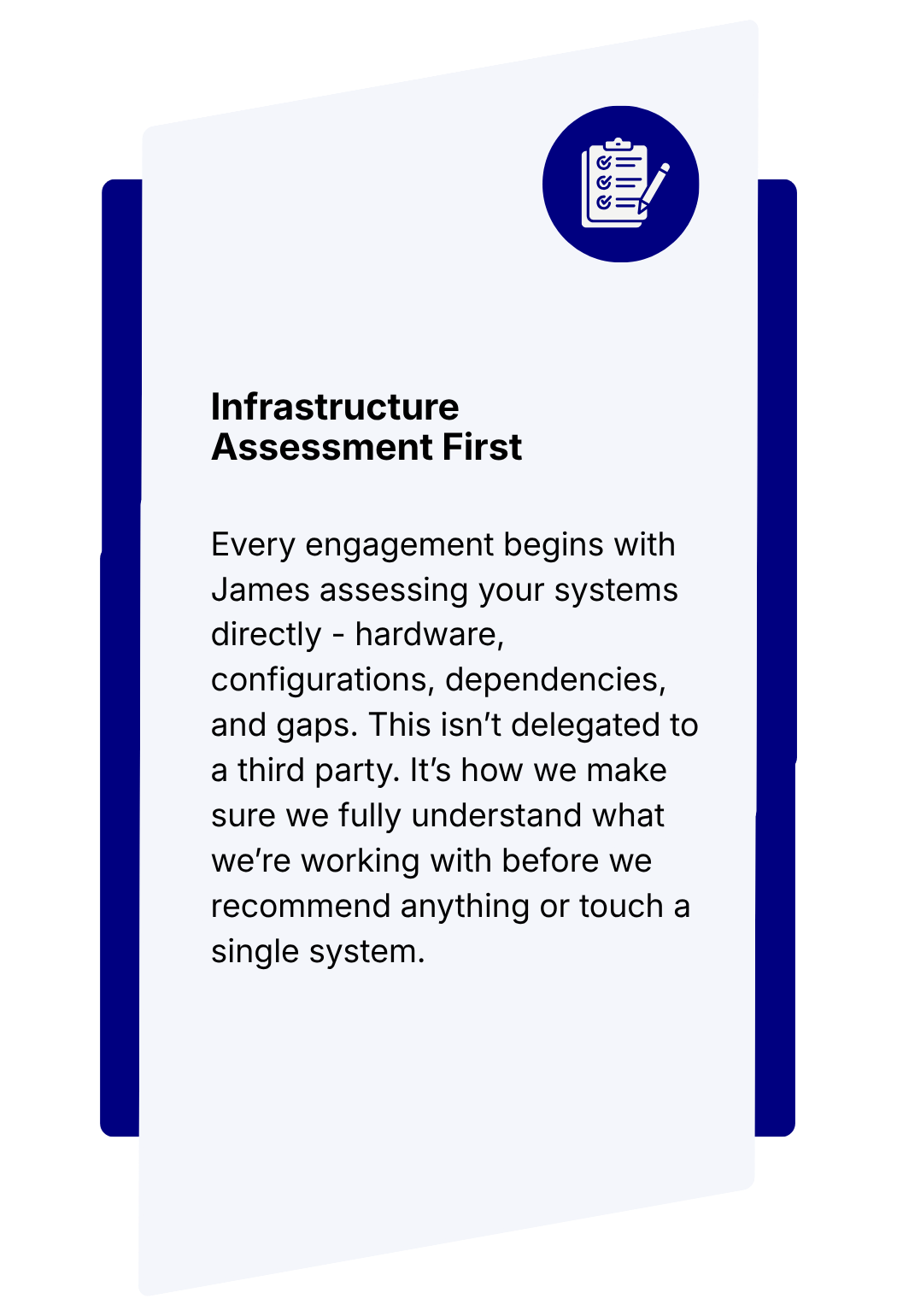
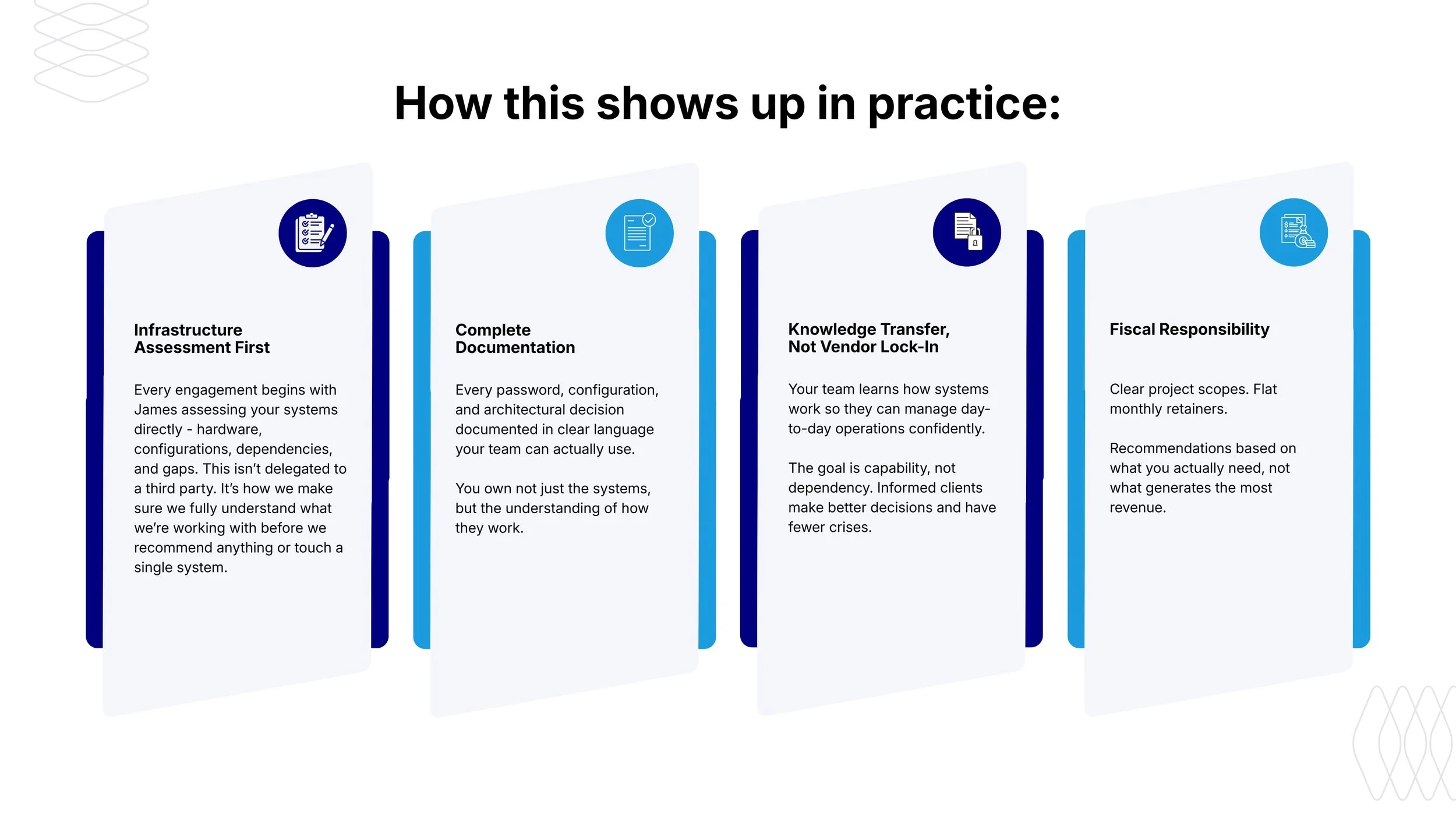
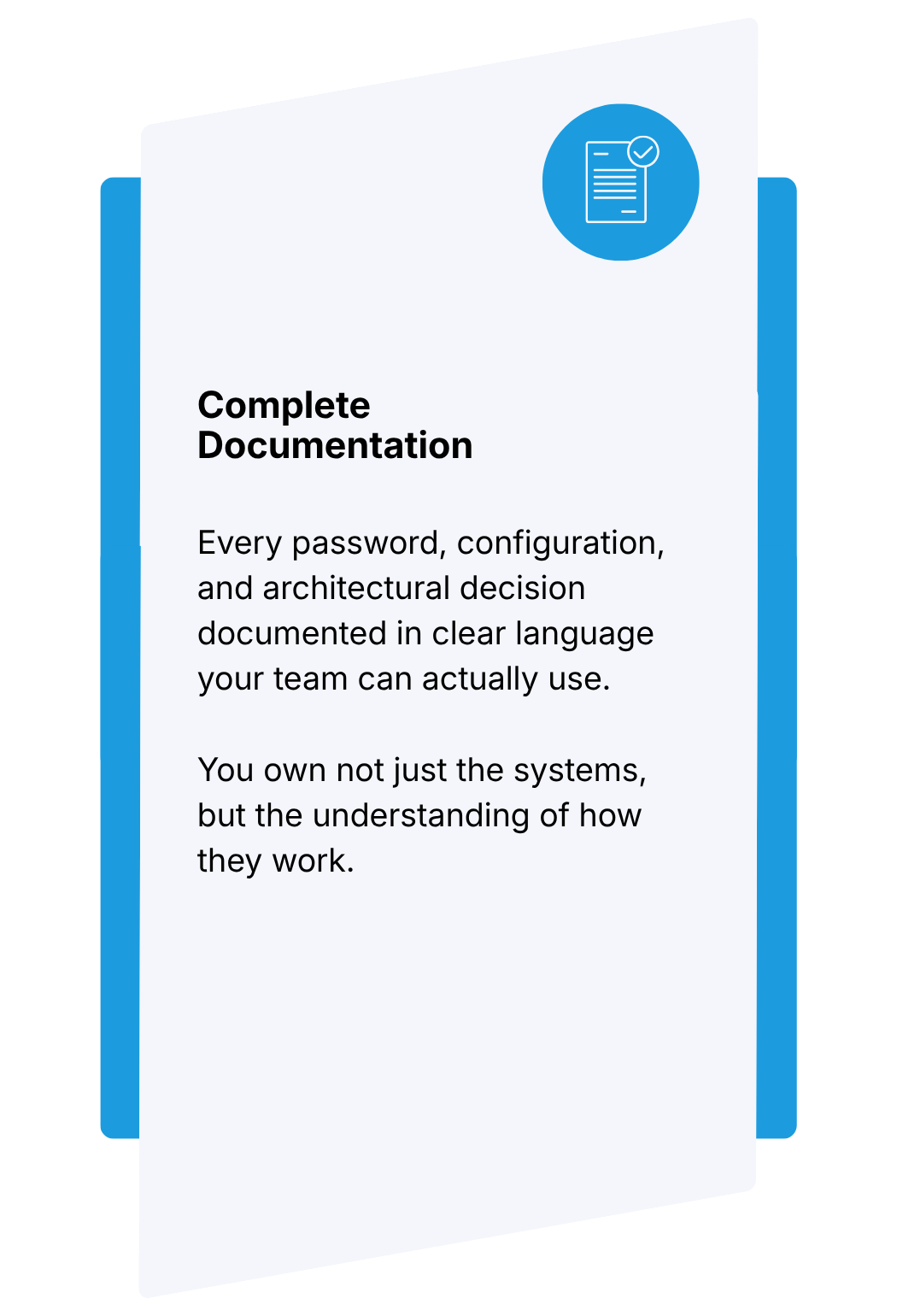
How this shows up in practice:


"If I can't explain it clearly enough for your team to understand and manage it, I haven't done my job. Your infrastructure should make you more capable, not more dependent."
— James Whitener
Ready to Stop Worrying About Your IT?
Whether you need an infrastructure assessment, have a specific project in mind, or want ongoing strategic support, we start every conversation the same way: understanding your situation and providing clear recommendations on next steps.